BOSPHORUS METAL FEST & THE BALANCE BETWEEN MUSIC AND ORGANISATION
Q: How was your experience of playing at Bosphorus Metal Fest?
Bahadır Uludağlar: Playing at Bosphorus Metal Fest is always a special experience because I know exactly how much work, passion and sacrifice goes into making a festival happen. As a musician, you focus on the stage and the audience. As an organiser, you know everything that happens behind the scenes. So, in a way, you experience the festival twice.
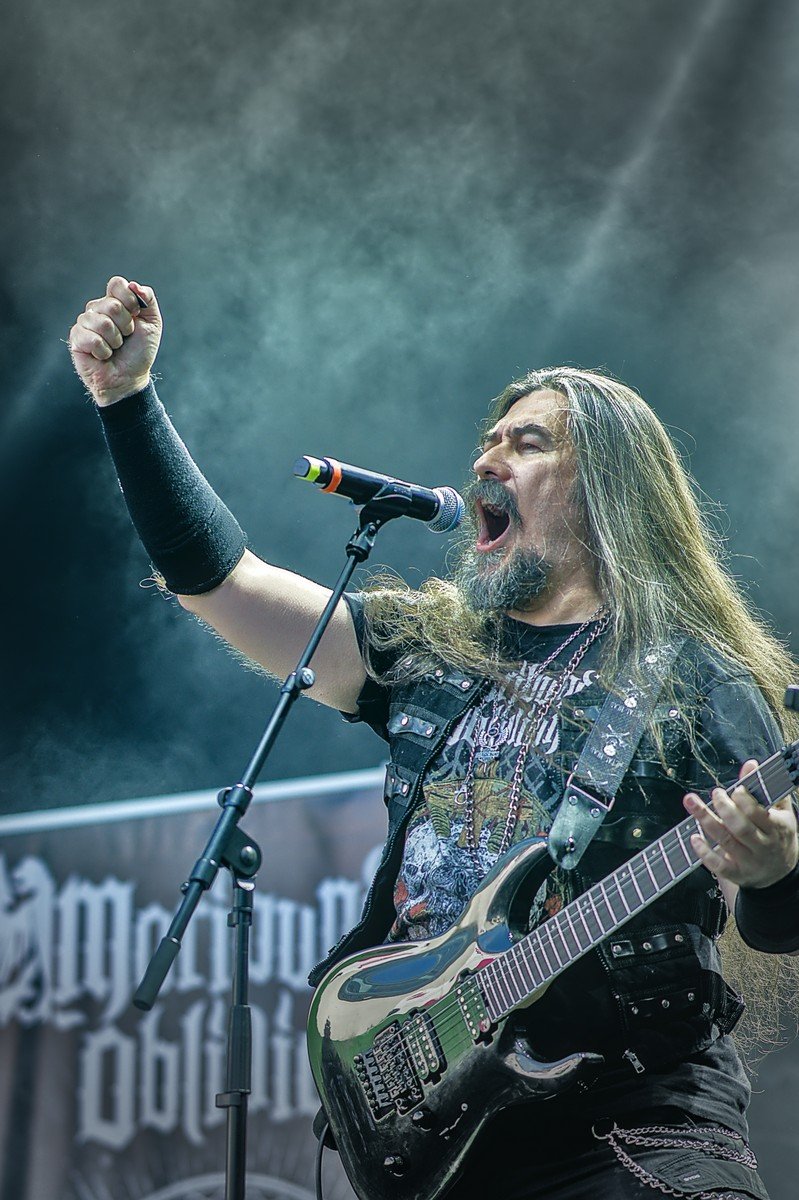
But once I step on stage with Moribund Oblivion, I leave the organiser’s responsibilities behind. At that moment, I am simply a musician doing what I have been doing for more than 25 years. That feeling is still very important to me.
Q: What do you prefer: playing concerts in clubs and closed venues or performing at festivals?
Bahadır Uludağlar: They offer different experiences, and I don’t think you should choose one over the other. In clubs, you can feel the audience’s energy at close range. There is a certain intimacy and intensity that works particularly well for extreme metal. Festivals, on the other hand, give you the opportunity to reach people who may not know your band and to become part of something bigger.
For Moribund Oblivion, both are important. We have played in small venues and on international festival stages, and each experience has contributed to our journey. Ultimately, what matters is not the size of the stage but the connection you establish with the audience.
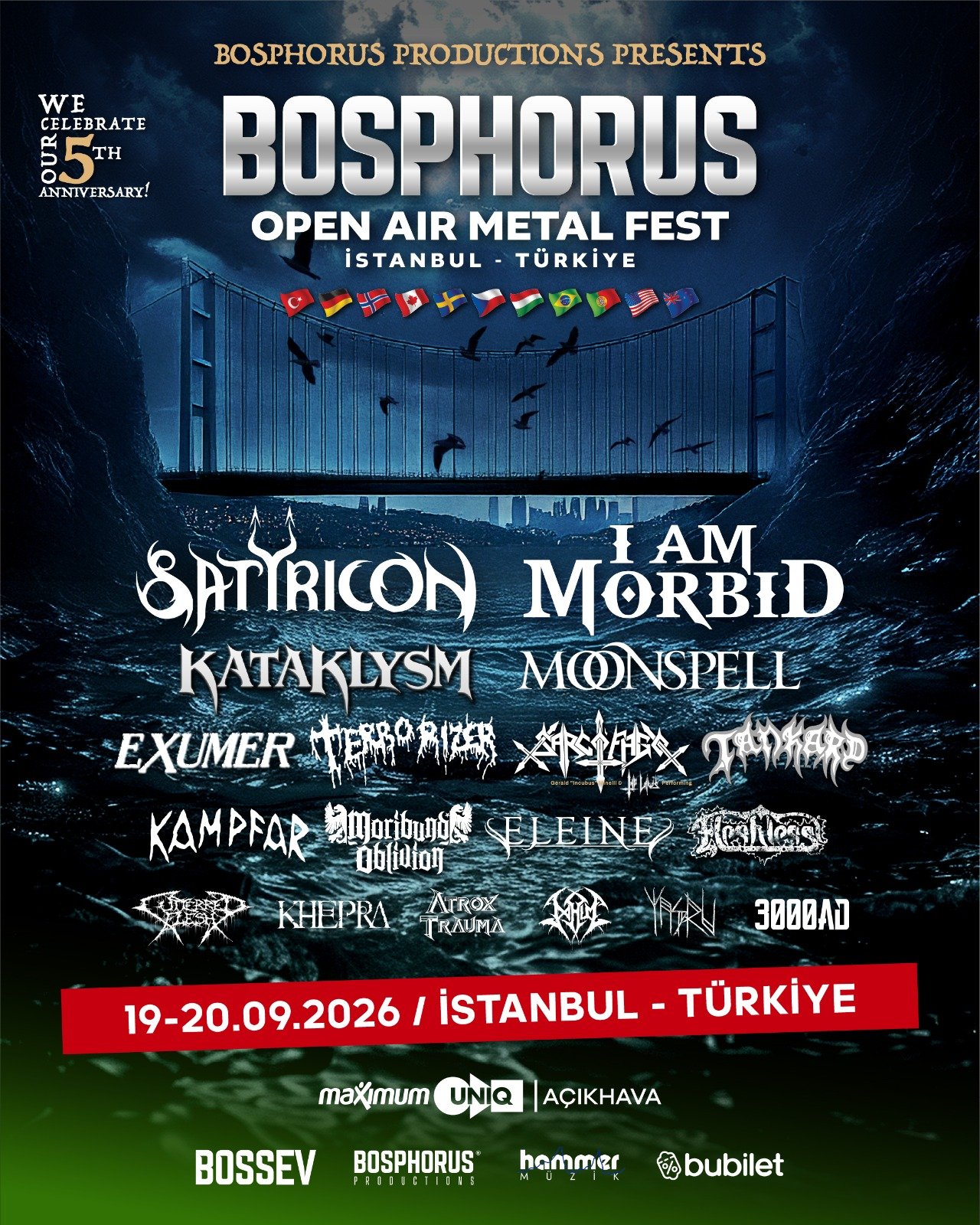
Q: You are also a successful organiser of Bosphorus Metal Fest, which includes a conference and other activities and must take a great deal of time to organise. How do you manage to maintain a work-life-band balance?
Bahadır Uludağlar: Honestly, I wouldn’t say that I have found a perfect balance. When you are involved in music, festival production and the business side of the industry, there is always something waiting for your attention. You have to make sacrifices, and sometimes your personal life pays the price.
However, I don’t see these activities as completely separate worlds. My experience as a musician helps me understand what artists need, while my work as an organiser gives me a broader perspective on the industry. The conference, for example, is about building a stronger music ecosystem, not simply putting bands on a stage.
I believe in taking responsibility for the things I choose to do. I also know that passion alone is not enough; you need discipline, planning and the ability to keep going when things become difficult. And, of course, the support of the people closest to you makes a huge difference.
MORIBUND OBLIVION: THE JOURNEY, THE SCENE AND THE MUSIC
Q: You founded Moribund Oblivion in Istanbul in 1999 and helped bring Turkish black metal to a wider international audience, at a time when the scene had far less global visibility than it does today. Looking back, what do you consider the band’s most significant contribution to the Turkish metal scene, and what would you like its legacy to be for the next generation of musicians?
Bahadır Uludağlar: When we started Moribund Oblivion in 1999, the conditions were very different. There was no social media, digital distribution was not what it is today, and reaching audiences outside Türkiye required a lot more effort. You had to build relationships, send physical promotional material, deal with labels and promoters, and prove yourself step by step.
I think one of our most significant contributions has been demonstrating that a band from Türkiye can develop its own identity, release albums internationally and perform consistently on the European metal circuit. We have spent decades representing our country on stages abroad, and we have done it without compromising the musical direction we believe in.
I don’t claim that we did it alone. Every band that has worked seriously to build an international presence has contributed to the development of our scene. But I hope our journey has shown younger musicians that geographical location does not have to define the limits of their ambitions.
As for our legacy, I would like Moribund Oblivion to be remembered as a band that never stopped creating, never gave up its identity and never waited for someone else to open the door. If the next generation takes that attitude further than we did, that would be a meaningful achievement.
Q: Did you encounter any specific difficulties as black metal musicians coming from Turkey, or are those issues no longer relevant? For example, do new bands have fewer opportunities, or has the situation changed?
Bahadır Uludağlar: Coming from Türkiye has both advantages and disadvantages. We have a distinctive cultural background and a geographical position between different worlds, which can offer an interesting perspective artistically. However, when it comes to the international music business, the practical challenges have always been real.
Access to the right networks, financial resources, international promotion and professional infrastructure can be more difficult for bands operating outside the major European music markets. Touring also involves considerable costs, logistics and administrative procedures. Talent alone does not solve these problems.
The situation has changed significantly because digital platforms have made it easier to distribute music and reach audiences worldwide. But visibility is not the same as opportunity. Having your music available everywhere does not automatically mean you can secure a good booking, build a sustainable touring schedule or earn enough to continue.
I believe Turkish bands need to think internationally from the beginning, without trying to imitate what is already happening elsewhere. We need stronger networks, more professional cooperation and greater solidarity within our own scene. Waiting for the industry to notice you is not a strategy. You have to create opportunities wherever possible.
Q: What inspired your decision to incorporate Turkish lyrics into your vision of black metal, and how has expressing your themes in your native language influenced the emotional intensity and identity of Moribund Oblivion?
Bahadır Uludağlar: For me, language is part of identity. Turkish is the language in which I grew up, think and experience many of my emotions. There are certain expressions, historical references and philosophical ideas that feel more natural and powerful in your native language.
Black metal has always been a genre in which atmosphere, emotion and personal expression are extremely important. I never believed that the genre had to be limited to a particular language or geographical identity. Its musical and philosophical possibilities are much broader than that.
Using Turkish allows us to express certain ideas with a different kind of depth and authenticity. It also creates a connection between our cultural background and the musical world we have built over the years.
For me, the important thing is not whether a band sings in Turkish or English. The important thing is whether the language serves the music and whether the expression is genuine. We should not have to abandon our own identity to be understood internationally.
Q: Your latest album, Intertemporal, released in 2025, explores existential themes, the nature of time and human existence. After more than 25 years with Moribund Oblivion, how has your understanding of these subjects evolved, and what makes this album a new chapter in the band’s artistic development?
Bahadır Uludağlar: When you are younger, you tend to approach existential questions with a different kind of intensity. As time passes, experience changes the way you look at life, death, existence and the place of human beings in the universe. You begin to understand that some questions do not necessarily have answers, and perhaps that is precisely what makes them worth exploring.
The concept of time has always fascinated me because we experience it as something linear, yet our memories, fears and expectations constantly connect different moments of our existence. We are shaped by what has happened, influenced by what is happening and often controlled by what we imagine might happen.
With Intertemporal, we wanted to continue exploring these ideas through the musical language of Moribund Oblivion. After so many years, it would be easy to repeat a formula that people already recognise. But that has never been our intention. We want to remain recognisable as a band while continuing to develop.
I see Intertemporal as another stage in that process. It reflects our accumulated experience, but it also demonstrates that we still have questions to ask and new musical territory to explore. For me, artistic development is not about changing everything with every album. It is about moving forward without losing the essence of who you are.
Q: How satisfied are you with the reception of the last album?
Bahadır Uludağlar: We are pleased with the response to Intertemporal, particularly from listeners who have followed the band for many years and understand the direction we are pursuing. It is always rewarding when people connect with an album beyond its immediate musical impact and engage with the ideas behind it.
At the same time, I try not to measure an album’s value solely through reviews, streaming numbers or social media reactions. Those things are part of the modern music business, and they certainly matter, but they don’t tell the whole story.
For me, the real test is whether we have created something we genuinely believe in and whether the album can stand alongside our previous work. We have. And the fact that we are still releasing new material, playing internationally and finding new listeners after more than 25 years is something I value greatly.
THE MUSIC BUSINESS, SUCCESS AND THE FUTURE
Q: What do you like most about your work, and what do you like least?
Bahadır Uludağlar: The best part is creating something that did not exist before and seeing it connect with people. Whether it is a song, an album, a live performance or a festival, there is a real sense of achievement in bringing an idea to life.
I also enjoy the international side of what I do. Meeting people from different countries, working with musicians and industry professionals, and seeing how music connects people across cultural boundaries is one of the most rewarding aspects of this business.
The difficult part is everything that can prevent the creative side from happening. Financial pressure, bureaucracy, administrative obstacles, unreliable cooperation and the constant uncertainty of the music industry can be exhausting. As an independent artist or organiser, you often have to take responsibility for problems that have very little to do with music itself.
But this is the reality of the business. If you want to remain independent and make your own decisions, you must also be prepared to deal with the responsibilities that come with that freedom.
Q: What advice would you give to a demo band regarding its career and efforts? What does it take to succeed?
Bahadır Uludağlar: First of all, develop your own identity. The world does not need another band that sounds exactly like an established band. You can be influenced by your heroes, of course, but you need to understand what makes your own music different.
Second, take the professional side seriously. Rehearse properly, record the best music you can afford, prepare a professional press kit, communicate clearly and learn how the industry works. Talent is essential, but talent without discipline and consistency rarely gets you very far.
Third, understand that building a career takes time. Do not expect one release, one video or one successful concert to change everything overnight. Build relationships, play live whenever it makes sense, follow up on opportunities and treat people professionally. Your reputation travels through the scene much faster than you might think.
I would also tell young bands not to confuse social media visibility with a real career. Online attention can be useful, but you need a sustainable strategy that includes music, live performances, audience development and realistic financial decisions.
And finally, do not spend all your energy waiting for someone to discover you. Take initiative. Contact the right people, research the market and create opportunities. There are no guarantees in this business, but a serious and consistent approach gives you a much better chance.
Q: What does success mean to you, considering your career and the influence Moribund Oblivion has had?
Bahadır Uludağlar: Success means different things at different stages of your life. Of course, international recognition, good concerts and positive feedback are important. It would be dishonest to say otherwise. We all want our work to reach people.
But after more than 25 years, I see success in a broader way. We started Moribund Oblivion in Istanbul in 1999, and we are still here, creating music, releasing albums and performing abroad. We have built a history that belongs to us, and nobody can take that away.
We have continued despite financial difficulties, changing industry conditions and all the obstacles that come with being an independent band from Türkiye. That persistence means a great deal to me.
As an organiser, I have a similar perspective. Success is not simply selling tickets or booking a big name. It is building something that has a lasting impact, creating opportunities for artists and contributing to the development of the music community.
I don’t believe success should be defined entirely by money, fame or the size of your audience. For me, it is about having the freedom to make your own decisions, remaining true to your principles and knowing that your work has made a difference.
Q: What is your ambition in terms of a dream concert or festival? Is there a particular event you would like to play, or a band you would like to share a stage with or collaborate with?
Bahadır Uludağlar: There are certainly festivals and bands I would love to share a stage with, but I have never wanted to reduce my ambitions to a single name on a bucket list. After all these years, I am more interested in the significance of an experience than in the prestige of a particular appearance.
For Moribund Oblivion, performing at one of the major international metal festivals in front of a huge audience would always be exciting. Sharing a stage with bands that have shaped the genre and influenced generations of musicians is something any metal musician can appreciate.
However, I also have a dream that goes beyond our own performances: seeing Bosphorus Open Air Metal Fest become a recognised international destination for metal fans, artists and industry professionals. Istanbul has an extraordinary cultural and geographical identity, and I believe it has the potential to offer something genuinely different to the international festival circuit.
Imagine bringing major international bands, emerging artists, industry conferences and cultural activities together in Istanbul, with the Bosphorus as the backdrop. That would be a meaningful achievement, not only for me but also for the Turkish metal scene.
Q: What are your plans for the future?
Bahadır Uludağlar: The immediate priority is to continue moving forward with Moribund Oblivion. We have no intention of slowing down. We want to keep developing our music, reach new audiences and continue performing internationally. After Intertemporal, there is still plenty of creative ground we want to explore.
At the same time, I want to keep developing Bosphorus Open Air Metal Fest and the wider platform around it. My ambition is for it to grow beyond the idea of a conventional music festival and become an international meeting point for the metal community. The conference and cultural activities are important parts of that vision because a strong scene needs more than concerts. It needs knowledge, professional networks and opportunities for collaboration.
Of course, independent projects require financial stability, institutional cooperation and a lot of hard work. We have learned not to take anything for granted, and we know that ambitions must be supported by realistic planning.
Ultimately, I want to continue building things that have a life beyond a single album, a single concert or a single festival edition. I have spent most of my life working in metal, and I still have the same fundamental motivation: to create, to challenge myself and to leave something meaningful behind.
I don’t think you should reach a point where you believe you have done enough. As long as you have something to say and the determination to make it happen, there is still a reason to move forward.
Photo credits: All photographs from the band archive; except for the second photography: Igor Dešić